
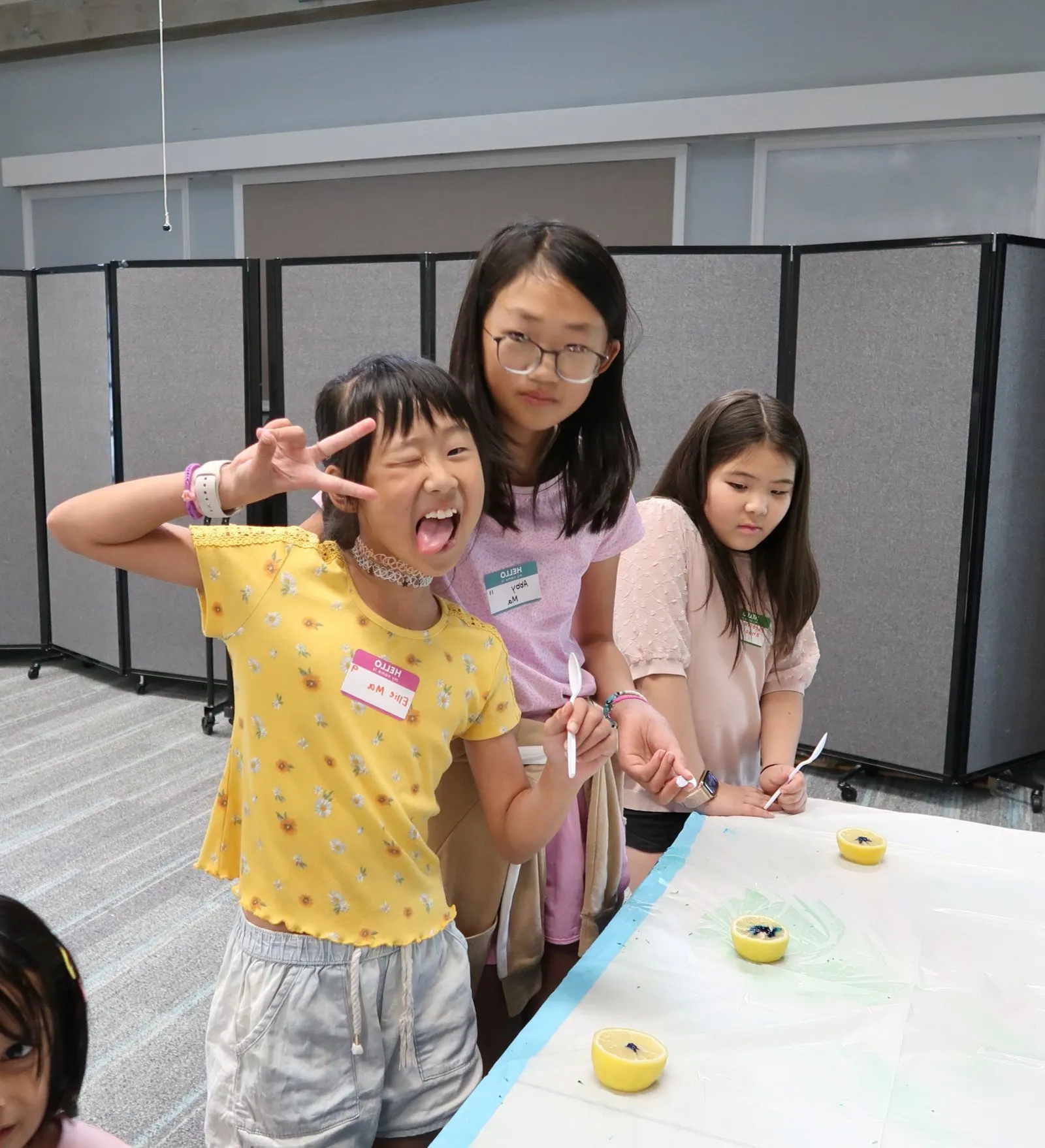
At ChemQuest, kids make elephant toothpaste, oobleck, lemon volcanoes, invisible ink, strawberry DNA, slime, Cartesian divers, ice cream in a bag, marshmallow towers, soda geysers, and homemade playdough.
We're a nonprofit run by high school students in Glen Mills, PA. We run free, hands-on science events at local libraries and learning centers. Kids do the experiments themselves, and our volunteers help out and answer their questions.
Have a question? Come say hi on our Discord.
- 8events so far
- 130+registrations across our events
- $0cost to families, every time
- 48newsletter issues sent
Next event
All events, including past onesThe next event is in the works
We announce new events on our Discord and in our newsletter.
In the meantime
- Try an experiment at home
- This month it's a homemade lava lamp. See the steps
- Want an event near you?
- Libraries, schools, and learning centers can ask us to host one.
- See what we've been up to
- Photos from past events
Ways to get involved
Parents and kids
Our events are free. Each one lists the ages it’s for and an RSVP link so we bring enough supplies.
Find an eventHigh school students
Help teach kids at experiment stations, help set up and clean up, and earn volunteer hours.
VolunteerSponsors and donors
Families never pay, so sponsors and donors cover our supplies. Sponsorships start at $50.
Sponsor & donateLibraries and learning centers
Want to host a free event? Our volunteers bring all the supplies and run every station. We just need a room with tables.
Email us about hosting
What happens at an event
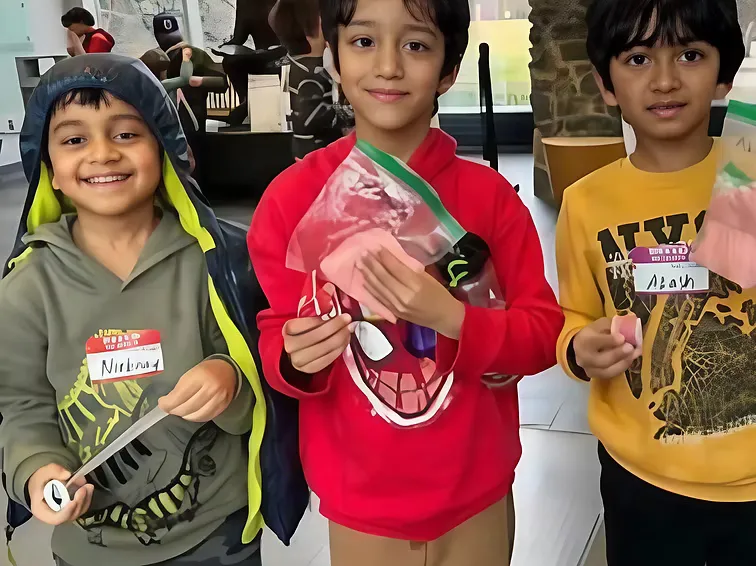
Kids move from table to table in small groups and spend about 15 minutes at each experiment. Volunteers at every table help them through it, but the kids do the experiment themselves.
We've also run 2 science fairs where kids present their own projects.
More experiments we've done
Each one was a station at a past event. Pick one to see how it works.
Soda has carbon dioxide gas dissolved in it. Gas bubbles form easily on rough surfaces, and a Mentos is rough all over. When you drop some in, a lot of gas comes out at once and pushes the soda out of the bottle.
Kids mash up a strawberry with soap and salt. The soap breaks open the cells, which lets the DNA out. When cold rubbing alcohol is added, the DNA comes together into white strands you can see.
Density is how much matter is packed into a space. Kids pour different liquids into one container and watch where each one ends up. The densest liquid sinks to the bottom and the least dense one stays on top.
Kids make a small oil spill in a tray of water and try to clean it up with different materials. Oil floats on water and spreads out, so it’s hard to collect. We talk about how spills like this hurt ocean animals.
Red cabbage juice changes color when you add an acid or a base. Acids like lemon juice turn it pink or red, and bases like baking soda turn it blue or green. Kids use it to test things from the kitchen.
Kids mix cream, sugar, and vanilla in a small bag, put it in a bigger bag with ice and rock salt, and shake. The salt lowers the freezing point of the ice, which makes the ice colder. Heat moves from the cream into the ice, and the cream freezes.
Lemon juice is an acid and baking soda is a base. When they mix, they react and make carbon dioxide gas. The gas makes bubbles, and the foam spills over the lemon.
Hydrogen peroxide breaks down into water and oxygen gas, but usually very slowly. Yeast makes it happen fast. Dish soap traps the oxygen in bubbles, so foam comes out of the bottle. The foam is warm because the reaction gives off heat.
The diver is a pipette with a hex nut on it and a little air inside. Squeezing the bottle pushes water into the pipette and squeezes the air, so the diver gets heavier and sinks. When you let go, the air takes up more room again and the diver floats up.
Kids pour vinegar into a bottle, put baking soda in a balloon, and stretch the balloon over the top. When the baking soda falls in, it reacts with the vinegar and makes carbon dioxide gas. The gas fills up the balloon.
Kids write a message on paper with baking soda and water and let it dry. Then they brush grape juice over it. Grape juice changes color when it touches a base like baking soda, so the message shows up.
Kids build towers with toothpicks and mini marshmallows. A square made of toothpicks bends easily, but a triangle keeps its shape. Adding triangles makes a tower stronger, so it can go higher.
The bottle is the chest. The straws are the trachea and bronchi, and two small balloons are the lungs. A balloon stretched over the bottom is the diaphragm. Pulling it down makes the lungs fill with air, and pushing it up lets the air out.
Oobleck is cornstarch and water. When you squeeze it or tap it hard, it feels solid. When you hold it gently, it drips like a liquid. Slime is made from glue and an activator, which connects the glue’s molecules so it stretches.
Who we are
Two friends who loved chemistry started ChemQuest. Our first event, at Rachel Kohl Library in August 2023, drew more than 20 kids. We've held 8 events so far. Today ChemQuest is run by students from Garnet Valley and Unionville high schools.
Join the ChemQuest Discord
Anyone in the ChemQuest community who's 13 or older can join, including kids in 7th and 8th grade, parents, and volunteers. We post event news there first, plan events, and answer questions.
34 members
Join the Discord serverPrefer email?
Our newsletter has event dates, at-home experiments, and STEM news.
Subscribe to the newsletter